
Legal Documents for Selling Land in Georgia
How to Sell Land in Georgia
Selling land in Georgia requires more paperwork than most people expect. Whether you're ready to sell a rural parcel or a subdivision lot, having the right documents protects both the buyer and seller throughout the transaction. Unlike selling a home with an established address and prior inspection history, selling vacant land involves unique legal considerations, especially around title and boundaries.
At a minimum, you'll need a deed to transfer ownership to the new owner, a land survey confirming property boundaries, and a purchase agreement outlining the terms. Some transactions also use a land contract when the seller provides financing directly to the buyer. Missing any of these can create legal issues that delay or derail your closing. Getting organized before you list saves time and money, and ensures the process goes smoothly from offer to recorded deed.
How Legal Documents For Selling Land Work in Georgia
When you decide to sell property in Georgia, the paperwork process begins well before any money changes hands. Understanding what documents are needed to sell land, and in what order they come into play, helps you avoid surprises at the closing table.
The first step is confirming legal ownership. A deed in your name proves you own the land and establishes the foundation for the entire sale. Before you list your property, it's smart to pull your existing deed and verify that the name on it matches your current legal name. Title companies and real estate attorneys often flag mismatches that can slow down or stall a transaction.
Once you're looking to sell, you'll typically enter into a purchase agreement with a prospective buyer. This document spells out the terms of the sale, price, contingencies, and timeline. After the agreement is signed, the transaction moves into the due diligence phase, where the buyer may order inspections or review the survey to confirm property lines.
A bill of sale may also accompany the deed in some transactions, particularly when personal property or equipment transfers alongside the land. It's a separate legal document that itemizes those items and records the value of your property being conveyed.
At closing, the deed transfers possession of the property from you to the buyer. In Georgia, real estate documents must be handled by a licensed attorney, not just a title company or escrow agent. The Supreme Court of Georgia has consistently held that closing a real estate transaction or preparing deeds is the practice of law, meaning only a licensed Georgia attorney may legally close the transaction. This is different from many other states where title companies handle closings independently.
For a sale by owner, this attorney requirement still applies. Selling land without professional legal help carries real risk. Even if you find your own buyer and negotiate the deal yourself, you still need a Georgia-licensed attorney to prepare the deed and close the transaction. Sellers who try to sell real estate without legal support often encounter recording problems, title defects, or disputes that are far more costly to fix after the fact. If you need to sell and want to keep costs manageable, hiring a real estate attorney for just the closing, without a real estate agent, is a common and cost-effective approach. Essential paperwork handled correctly from the start leads to a smooth sale for everyone involved, including land buyers.
Legal Documents For Selling Land in GA: Step by Step
Knowing exactly which documents you need, and when, makes the process far less stressful. Here is a practical look at the required documents and how they fit into the overall timeline when selling your property in Georgia.
1. Proof of Ownership (Deed)
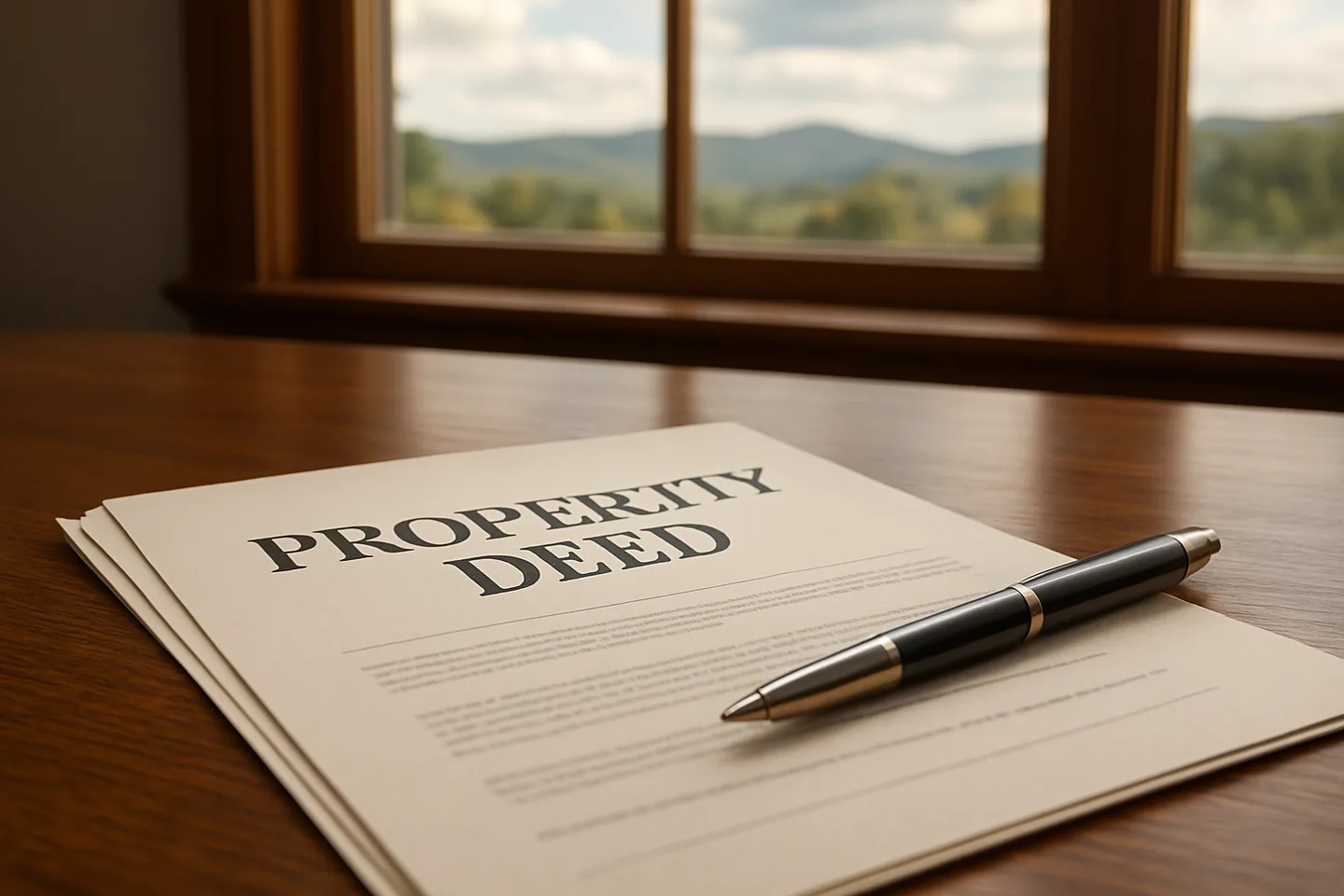
Your property deed is the foundational legal document in any land transaction. Before you can sell land, you need a deed in your name showing you have the legal right to convey it. If you can't locate your deed, the Clerk of Superior Court in your county keeps recorded copies.
2. Purchase and Sale Agreement
This is the binding contract between you and the buyer. It covers the sale price, closing date, contingencies, and any special conditions. Unlike selling a house with standard residential forms, land sale agreements often require custom terms, especially for agricultural parcels, timber rights, or properties with access easements. This is one area where legal advice from a Georgia attorney pays for itself.
3. Property Survey
A current survey confirms the exact boundaries of the parcel. It's one of the documents needed to sell land that buyers and lenders almost always require. Even if you're not using a lender, an up-to-date survey protects both parties from boundary disputes after closing. For residential property with a platted subdivision lot, the existing plat may suffice, but rural acreage usually needs a fresh survey.
4. Seller's Disclosure
According to verified Georgia real estate guidance, sellers must disclose any known latent defects or issues that a buyer could not discover through a reasonable inspection. While a written disclosure form is not legally mandatory for vacant land the way it is when selling a house, providing one is strongly recommended. A completed disclosure form protects you from future liability and builds trust with buyers. Skipping the disclosure entirely is a risk most sellers shouldn't take.
5. Listing Agreement (If Using an Agent)
If you work with a licensed agent to list your home, or in this case, your land parcel, you'll sign a listing agreement authorizing that agent to market the property on your behalf. This document outlines the agent's commission and the duration of the listing.
6. Transfer Tax Forms and Deed
Georgia law requires that Form PT-61 (one original and three copies) accompany any deed conveying real property when presented to the Clerk for recording. This form reports the sale to the state for property tax purposes. The documents you need at closing also include the final deed, prepared by your attorney, which legally transfers ownership to the buyer. In order to sell and complete the transfer, the deed must be signed, notarized, and recorded.
Georgia-Specific Rules for Legal Documents For Selling Land
Georgia has several rules that set it apart from other states when it comes to the selling process. Understanding them ahead of time prevents delays and unexpected costs.
Deed Requirements and Title
Georgia has three main deed forms: the warranty deed, the limited warranty deed, and the quitclaim deed. The warranty deed offers the strongest protection for the buyer, guaranteeing that the title to the property is clear of defects. A title deed must be signed by the grantor and attested by a notary public to be valid under Georgia law. When you're selling a property and want to demonstrate clean ownership of the property, a warranty deed is typically what buyers and their lenders expect.
Transfer Tax
According to the Georgia Department of Revenue, the real estate transfer tax is imposed at $1.00 for the first $1,000 of the sale price, and 10 cents for each additional $100. This must be paid before the deed can be recorded. The Clerk of Superior Court then attaches a certification to the deed confirming payment. The flat recording fee for conveyance instruments is $25.00, paid to the same Clerk. These are key documents-related costs to budget for before closing.
Legal Description
Every deed must include an accurate legal description of the property, not just a street address. This legal description of the property typically includes metes and bounds language or a reference to a recorded plat. An incorrect description of the property can cloud title and create problems years down the road. Your attorney will verify this as part of preparing the deed.
Nonresident Withholding
If you don't live in Georgia, O.C.G.A. § 48-7-128 requires income tax withholding at 3% of the purchase price for nonresident sellers. This applies to any sale on or after January 1, 1994, per the Georgia Department of Revenue. If you're trying to sell land by owner and you live out of state, factor this into your net proceeds.
Property Tax Records
Buyers and real estate agents commonly review property tax records as part of due diligence. Outstanding property tax balances must typically be resolved before or at closing. The sale process in Georgia requires that taxes be current, and the closing attorney will confirm this during title examination. Important documents like tax certificates or clearance letters may also be required depending on the county. Walker County landowners, for example, should verify their county tax records well in advance of listing.
Common Questions About Legal Documents For Selling Land in Georgia
How to avoid paying capital gains when selling land?
Georgia does not distinguish between short-term and long-term capital gains for state tax purposes. Beginning in the 2025 tax year, all capital gains are taxed at Georgia's flat individual income tax rate of 5.19%, enacted under House Bill 111. At the federal level, strategies like a 1031 exchange allow you to defer capital gains by reinvesting proceeds into a like-kind property. Installment sales, where the buyer pays over time through a sale contract, can also spread your gain across multiple tax years. Every situation is different, so speak with a tax professional before you sell your land to understand which approach fits your circumstances.
What are the four legal documents?
The essential documents for most Georgia land sales are: (1) the purchase and sale agreement, which captures the terms both parties agree to; (2) the deed, which transfers real property from seller to buyer; (3) Form PT-61, required by Georgia law for recording; and (4) the seller's disclosure statement. Depending on the transaction, a land purchase agreement, a survey, a sale contract, and lender-required forms may also be part of the complete list of documents at closing. The purchase and sale agreement and the deed are universally required for any land sale.
Are tax records necessary when selling land?
Yes, in practice. While tax records aren't always listed as mandatory documents for selling vacant land, they serve several important functions. They help confirm property ownership and the correct legal description. They also show whether any property tax balances are outstanding, which the closing attorney must resolve before transferring title. Buyers and their attorneys routinely request tax records as part of due diligence. Having them ready speeds up the process of selling and signals to buyers that you're well-prepared. If you're unsure where to find yours, the county tax assessor's office is a good starting point.
Are there risks involved in selling land without legal help?
Significant ones, yes. Trying to sell your land without an attorney in Georgia creates real exposure. The Supreme Court of Georgia has held that preparing deeds or closing a real estate transaction without a license is the unauthorized practice of law. Beyond legality, the risks include title defects you didn't catch, a sale contract that doesn't hold up, undisclosed easements, and closing date disputes. Buying or selling land is often one of the largest financial transactions a property owner will make, and cutting corners on legal help rarely saves money in the long run. Land value can be lost or tied up in litigation for years if something goes wrong.
Your Options Regarding Legal Documents For Selling Land in GA
Navigating a land sale in Georgia involves more than finding a buyer. A valid real estate purchase agreement, a properly prepared deed, and accurate closing costs are all part of a transaction done right. Whether you work with an agent, handle a land sale independently, or partner with a direct buyer, the paperwork requirements don't change.
If you're considering selling land in Fulton County or anywhere else in Georgia and want a straightforward process, we're happy to answer questions and walk you through how a direct sale works. There's no pressure, just honest information to help you make the best decision for your situation. Reach out whenever you're ready.
Need to sell your Georgia land? We buy land directly from owners for cash, with no fees, no commissions, and we close in as little as 2 weeks.
Sell Your Georgia Land for Cash
Ready to sell? We buy land directly from owners across Georgia. Get a fast, no-obligation cash offer.
Get Your Free Cash Offer
Tell us about your Georgia property and receive a no-obligation cash offer within 24 hours.